
PMOS Diet Plan: What to Eat, Avoid & Why Food Matters

If you have PMOS (you probably know it as PCOS), you've likely been handed some version of this advice: "Just lose weight and it'll get better."
And then… nothing. No plan. No explanation of why your body seems to hang on to every pound. Maybe you went looking online and found a hundred different "PCOS diets" telling you to cut carbs, cut dairy, cut gluten, cut joy.
I want to take a big breath with you here. You don't need to give up the foods you love to manage PMOS. You don't need a perfect diet. What you need is to understand why food matters so much with this condition, and then build a few small habits that actually fit your life.
That's what this guide is for. I'll cover how food affects your hormones and blood sugar, what to eat more of, what to keep an eye on, some meal ideas (even for beginner cooks), and which supplements are worth asking your doctor about.
Quick note: I'm a health coach, not your doctor. Everything here is meant to work alongside the care you get from your medical team, not replace it.
Why Food Matters So Much with PMOS
Here's the part nobody explains well: insulin resistance sits at the heart of PMOS for a lot of women.
Insulin is the hormone that moves sugar from your blood into your cells for energy. When your cells don't respond to it well, your body makes more insulin to compensate. And higher insulin levels can stimulate your ovaries to make more androgens (the "male" hormones), which feed into irregular periods, acne, unwanted hair growth, and stubborn belly weight.
This isn't just about body size, either. A meta-analysis of gold-standard insulin studies found women with PMOS had about 27% lower insulin sensitivity than women without it, regardless of BMI. So if you've ever felt like your body works against you no matter what you eat, you're not imagining it. And it has nothing to do with willpower.
The good news? What you eat and how you move directly affect how your body handles blood sugar and insulin. That's why food is one of the most powerful tools you have. Not to punish yourself, but to give your hormones a steadier environment to work in.
And if weight loss is one of your goals, research shows that even a modest 5% loss of body weight often leads to meaningful improvements in cycles, androgen levels, and metabolic health. For a 180-pound woman, that's 9 pounds. Not 50. Nine.
So… What Is the PMOS diet? (And What's the Best One?)
I'm going to save you hours of scrolling: there is no single "PMOS diet."
The 2023 International Evidence-Based Guideline, developed with input from 39 organizations across 71 countries, looked at the research and concluded that no one specific eating plan beats the others. Keto, vegan, Mediterranean, intermittent fasting… they can all work for someone. None of them is magic.
That might sound disappointing, but I actually think it's freeing. It means the best diet for PMOS is the one you can stick to for months and years, not weeks. The one that fits your schedule, your family, your culture, and your taste buds.
What the research does support is a consistent pattern:
Mostly whole, minimally processed foods
Enough protein and fiber at each meal
Carbs that digest slowly (lower glycemic index, or low GI)
Healthy fats
Portions that support your goals
That's it. No forbidden foods list. When I work with women who have PMOS, we don't start with a meal plan from a template. We start with what they already eat and look for the easiest swaps first.
What to Eat with PMOS
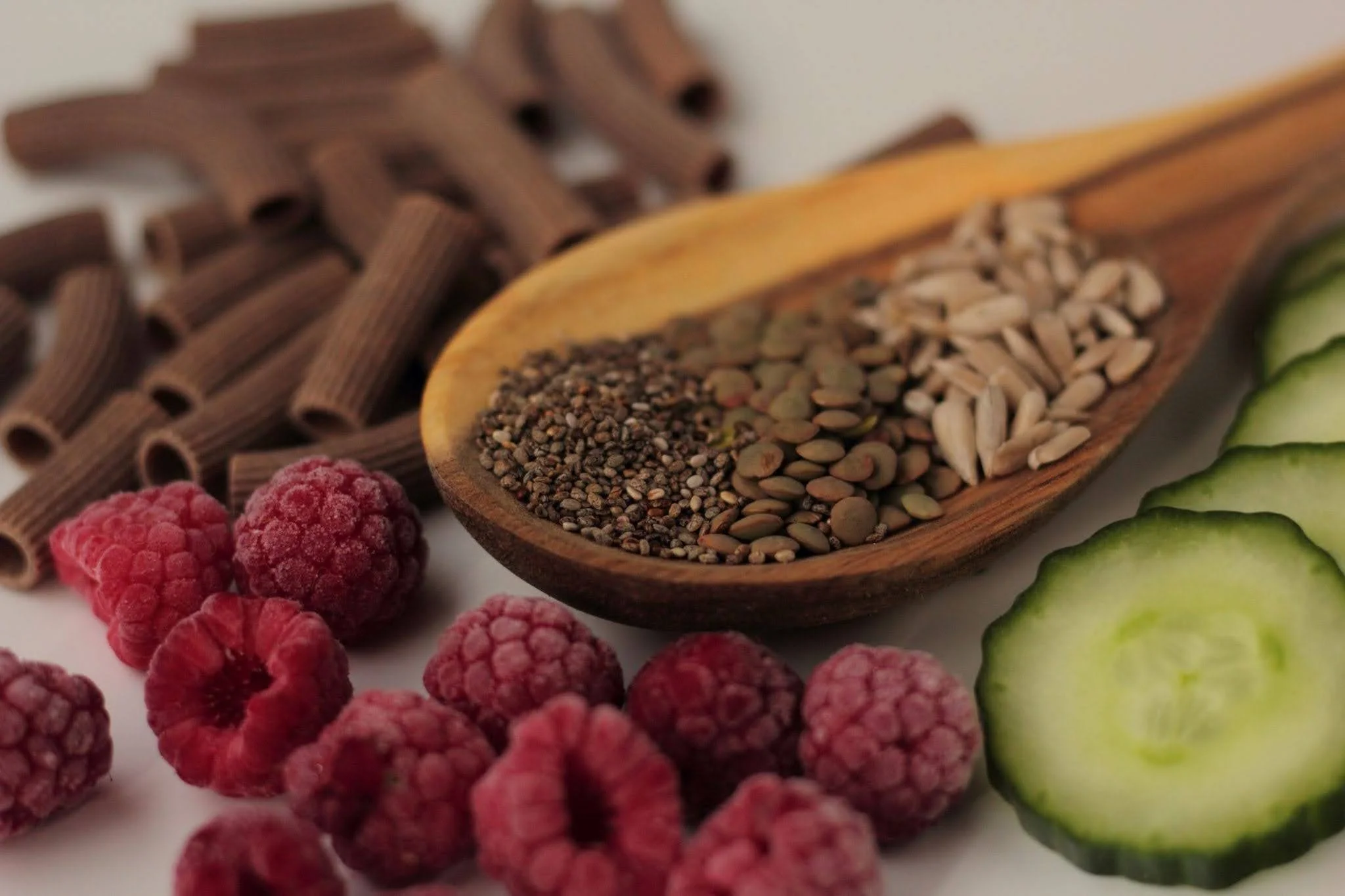
Think of this as "what to add," not "what to take away." Adding healthy foods tends to crowd out the rest naturally, and it feels a whole lot better than a list of rules.
1. Protein at Every Meal
Protein keeps you full, helps steady blood sugar, and protects your muscles while you lose fat. I aim for around 25–30 grams per meal with most of my clients. Think eggs, Greek yogurt, cottage cheese, chicken, fish, tofu, lentils, and lean beef. Need ideas? Here are my go-to meals with 30g of protein.
2. Fiber, Fiber, Fiber
Fiber slows digestion, which means a gentler rise in blood sugar after you eat (as opposed to a massive spike). A 2025 meta-analysis of randomized trials found high-fiber diets in women with PMOS improved insulin resistance, cholesterol, and androgen markers. Easy wins: veggies at lunch and dinner, berries, beans, chia seeds, oats.
3. Low GI Carbs (Yes, You Still Get Carbs!)
The glycemic index (GI) is just a ranking of how quickly a carb raises your blood sugar. Low GI carbs digest slowly. Research reviewed for the international guideline found low GI diets improved insulin resistance and cholesterol in women with PCOS compared to higher GI diets.
Low GI favorites are oats, sweet potatoes, quinoa, brown rice, whole grain bread, lentils, chickpeas, apples, and pears. And no, you don't have to give up potatoes. I love carbs, especially potatoes, and I still eat them. Pairing a carb with protein and fat helps to slow down an insulin spike, too.
4. Healthy Fats
Olive oil, avocado, nuts, seeds, and fatty fish like salmon add flavor, keep you satisfied, and support heart health. That matters, since PMOS comes with a higher cardiometabolic risk.
The Easy Formula
Build most meals like this: half your plate veggies, a palm or two of protein, a cupped handful of slow carbs, and a thumb of healthy fat. No weighing or measuring required.
What to Go Easy On (Not "Avoid Forever")
You'll see a lot of PMOS content with scary "never eat this" lists. I'm not going to do that to you. These foods aren't evil. They're just easier to overdo, and they tend to spike blood sugar quicker than others.
Sugary drinks. Soda, sweet coffee drinks, and juice are the biggest bang-for-your-buck change for most of my clients. Liquid sugar hits fast and doesn't fill you up.
Refined carbs on their own. White bread, pastries, and sugary cereal aren't off limits. Just try pairing them with protein, or swap in a higher-fiber version most days.
Ultra-processed snacks. Chips, cookies, and packaged treats are designed to be hard to stop eating. Here's how to spot whether "healthier" snacks really are healthier.
Alcohol. It adds calories and can mess with sleep and blood sugar. But it doesn't mean you have to stop consuming alcohol altogether. What works best is limiting its intake and having your favorite beverage in moderation.
What About Dairy and Gluten?
This one comes up constantly. Unless you have a diagnosed allergy, intolerance, or celiac disease, there isn't strong evidence that cutting dairy or gluten helps PMOS. Cutting whole food groups often just makes eating more stressful. If you suspect a food bothers you, talk to your doctor or a registered dietitian before eliminating anything.
The 80/20 Rule Works Here, Too
Aim to eat in a way that supports your hormones about 80% of the time. The other 20%? That's birthday cake, pizza night, and the brownie you've been thinking about all afternoon. Consistency beats perfection every single time.
A PMOS Diet Plan for Beginners (And for Weight Loss)
If you're just starting, please don't overhaul everything on Monday. That's how we end up "starting over" every Monday. Instead, pick one habit for one to two weeks and stack them:
Week 1: Add protein to breakfast.
Week 2: Add a vegetable to lunch and dinner.
Week 3: Swap one sugary drink a day for water, sparkling water, or unsweetened tea.
Week 4: Pair every carb with a protein or fat.
These are the same small, sustainable habits I used to lose my own weight after college, when exercise alone wasn't cutting it.
If Weight Loss Is Your Goal
Weight loss still comes down to eating a little less energy than you burn, which is called a calorie deficit. With PMOS, the quality of those calories matters more, because protein, fiber and low GI carbs help manage hunger and cravings. Keep the deficit gentle. Crash diets tend to backfire, especially when your hormones are already under stress.
A Sample PMOS Meal Plan (One Day)
This is a template, not a rulebook. Swap in foods you actually like. A meal plan or menu that you actually enjoy beats a "perfect" one you abandon by Thursday.
PMOS Supplements: What's Worth Asking About
Supplements get a lot of hype in PMOS circles. Some have promising research. None of them replace the basics of food, movement, and sleep. And please check with your doctor before starting anything, especially if you're on medication, trying to conceive, or pregnant.
Beyond the Plate: Movement, Sleep and Mindset
Food is undoubtedly the foundation. Remember, you can't out-exercise your diet, but a few other habits make your nutrition work even harder for you.
🏃 Move in a way you enjoy. The 2023 guideline follows general physical activity advice: 150–300 minutes of moderate activity a week, plus muscle-strengthening work on two days. Walking counts. Strength training is especially helpful because muscle is one of the biggest users of blood sugar.
🛌 Protect your sleep. Poor sleep makes cravings louder and insulin less effective the next day. PMOS is also linked to a higher risk of sleep apnea, so mention snoring or constant tiredness to your doctor.
🧠 Be kind to your brain. Anxiety, depression, and body image struggles are common with PMOS, and the guideline calls this out directly. Feeling frustrated doesn't mean you're failing. Progress with PMOS is often slower, and slow progress is still progress. Track wins beyond the scale, too, like energy, cycle regularity, and how your jeans fit.
🧑🧑🧒 Get support. Accountability is one of the biggest predictors of long-term success I see with my clients. Whether it's a friend, a support group or a coach, you don't have to figure this out alone.
Your Next Step
PMOS can feel like your body is playing by a different set of rules. In some ways, it is. But those rules can be learned, and you don't have to give up everything you love to work with them.
So here's your homework for this week, and it's just one thing: add a source of protein to your breakfast every day for the next seven days. That's it. Notice your energy and cravings by mid-morning. Next week, add the vegetable habit.
Small steps. Real food. A life you actually enjoy. That's how lasting change happens with PMOS.
PMOS diet FAQs
-
The one you can keep doing. International guidelines found no single diet works better than others. Focus on protein, fiber, low GI carbs, and healthy fats most of the time.
-
Nope! Choose slower-digesting carbs more often and pair them with protein or fat. Cutting carbs completely is hard to sustain, and it isn't required.
-
If weight loss is a goal, research suggests as little as 5% of your body weight can improve cycles, hormones, and blood sugar. A healthy lifestyle also helps even when the scale doesn't move.
