
How Much Water Should You Drink on Ozempic?
TL;DR
While GLP-1 medications like Ozempic, Wegovy, Mounjaro, and Zepbound don't directly cause dehydration, they can reduce thirst and cause side effects like nausea or diarrhea that make it easier to become dehydrated.
A practical goal is to drink about 0.5 to 1 ounce per pound of body weight of fluids per day, adjusting upward if you're exercising, in hot weather, or experiencing vomiting or diarrhea.
If you've started a GLP-1 medication and suddenly feel thirstier, dizzier, or more constipated than usual, water is probably part of the answer.
I hear this question constantly from clients starting Ozempic or Wegovy: "Does Ozempic dehydrate you, or am I just forgetting to drink water?" The honest answer is usually a little of both, and it's an easier fix than most people expect once you know what to look for.
This isn't about willpower. It's about a medication that changes your hunger and thirst cues simultaneously, often without you noticing until you're already behind.
In this guide, I'll cover why this happens, a practical number to aim for, the warning signs to watch, and realistic ways to stay on top of it. And, no, I'm not going to tell you to give up your morning coffee.
Key Takeaways
A practical coaching starting point: take your body weight in pounds, divide by two, and use that as a rough minimum daily ounce target. Keep in mind that the general recommendation is 11.5 cups (2.7 liters) to 15.5 cups (3.7 liters) of total fluid.
GLP-1 medications do not directly cause dehydration; they slow gastric emptying and blunt hunger and thirst signals, making it easy to under-drink without noticing. This is the real driver of GLP-1 dehydration concerns.
Dark urine, headaches, constipation that fiber doesn't resolve, and dizziness when standing are common indicators that you may be behind on fluids.
Add extra water on days with vomiting, diarrhea, alcohol, hot weather, or a hard workout. The amount varies, but even small increases throughout the day make a difference.
Electrolytes matter as much as plain water volume when side effects include repeated vomiting or diarrhea.
In moderation, coffee and tea contribute to daily fluid intake; you don't need to exclude them from your total.
Does Ozempic Dehydrate You?
Ozempic does not dehydrate you directly, but it creates the conditions that make dehydration much easier to slide into. There's an important difference between "the drug pulls water out of your body" and "the drug quietly removes the signals that remind you to put water in," and it's the second one that catches most people off guard.
Without getting too deep into the science, GLP-1 medications like Ozempic slow down how quickly food leaves your stomach. This helps you feel fuller for longer, which is one reason they reduce appetite and support blood sugar control. But for many people, eating less also means drinking less. You may not feel as thirsty even when they’re behind on fluids.
On top of that, common side effects like nausea, vomiting, and diarrhea are common during the first few weeks on a GLP-1 medication. These can all lead to additional fluid loss, separate from the appetite-suppressing effects.
In other words, you may have two things working against you at once: you're drinking less because you don't feel as thirsty, while also losing more fluids through side effects.
So, does Ozempic or other GLP-1 medication actually dehydrate you? They don’t pull water out of your body the way a stomach bug does, but they do something subtler: turn down the volume on your thirst cues right alongside your hunger cues.
In my experience coaching clients through their first weeks on a GLP-1 medication, the ones who start intentionally tracking their water intake from day one rarely end up dealing with this problem long-term. They build the habit before the cue disappears, and that makes all the difference.
You don't have to figure out GLP-1s on your own.
If you want expert guidance on nutrition, exercise, hydration, and long-term success, get in touch to see how I can support you.
How Much Water Should You Actually Drink on GLP-1s?
A practical coaching rule of thumb for the minimum amount of water to drink on a GLP-1 medication is your body weight in pounds divided by two, expressed as ounces per day.
Here's the number I give clients on day one:
Take your body weight in pounds, cut it in half, and use that as a starting ounce target for a normal day
Note that neither side effects nor big workouts have been factored in yet.
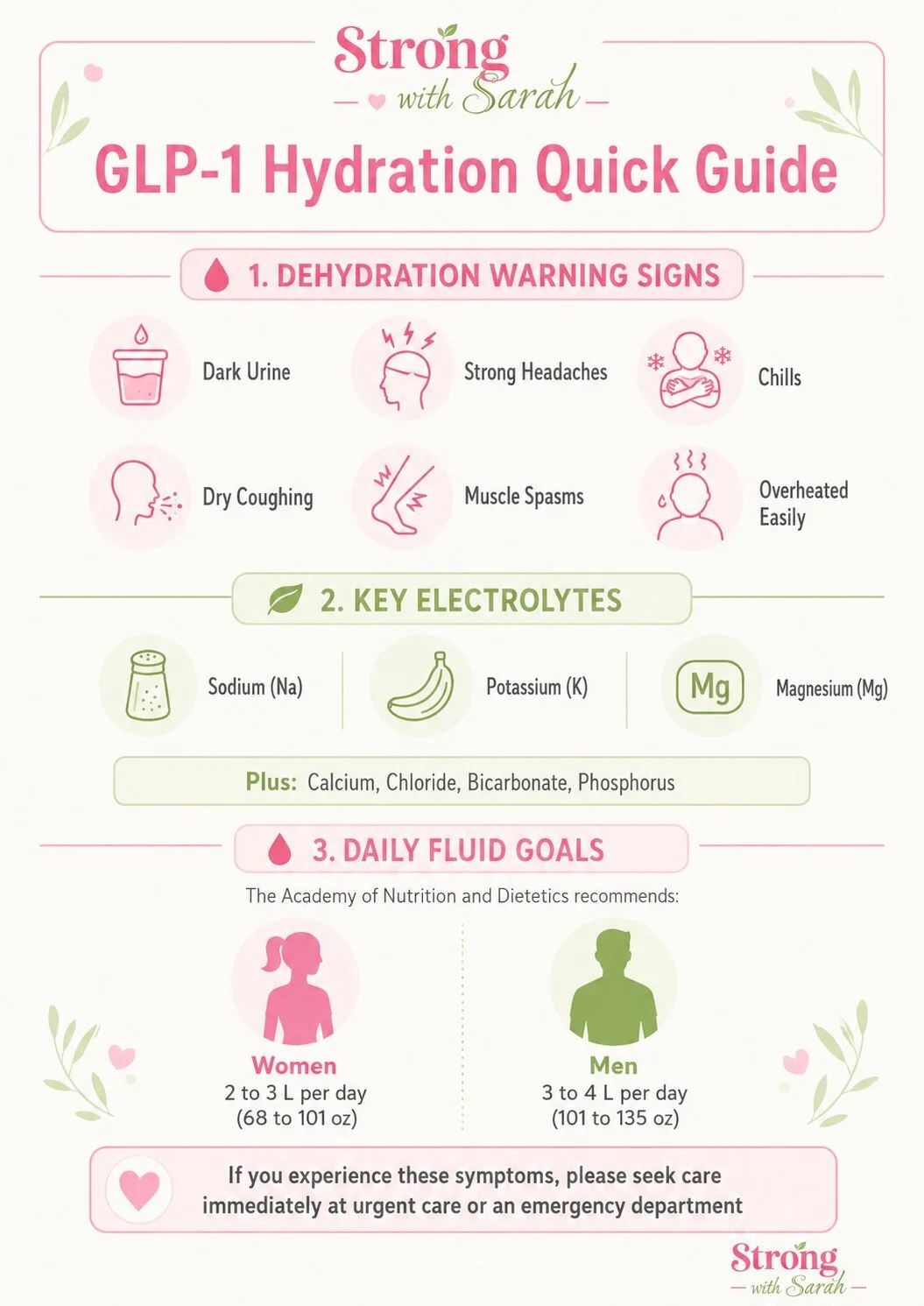
The Academy of Nutrition and Dietetics recommends:
Women: ~11.5 cups (2.7 L) per day
Men: ~15.5 cups (3.7 L) per day
Your personal target may be higher or lower depending on body size, activity, climate, and side effects.
As a simple rule of thumb, a 160 lb person would aim for a minimum of about 80 oz (10 cups) of water per day, while a 180 lb person would target a minimum of around 90 oz (11 cups). If that calculation falls below the general recommendation of 2 to 3 liters (68 to 101 oz) of fluids per day, use the higher target instead, especially if you're experiencing side effects like nausea, vomiting, or diarrhea.
How to Adjust Your Water Intake Day to Day
From there, you adjust based on what your day actually looks like. Because individual needs vary and there isn't a single universal add-on figure, the goal is to drink more consistently throughout the day rather than chase a precise number:
Workout day or hot weather: Plan to sip more regularly throughout. Many people find they need more water on active or warm days, and smaller, frequent sips tend to work better than drinking a large amount all at once.
GI symptoms (nausea, vomiting, diarrhea): Prioritize small, frequent sips rather than large volumes at once, and consider electrolytes alongside plain water.
Alcohol: Add water alongside each drink and prioritize fluids before bed.
In moderation, coffee and tea contribute to daily fluid intake. Research on moderate caffeine intake suggests it does not meaningfully offset hydration for most people, so a cup or two in the morning counts toward your total, not against it. You don't need a gallon jug strapped to your side. You just need a reliable daily target and a few simple habits to reach it.
When vomiting or diarrhea are part of the picture, electrolytes matter as much as fluid volume. Plain water alone doesn't replace what's lost during repeated GI symptoms. An electrolyte packet added to a glass of water on those days can make a real difference in how you feel.
GLP-1 Hydration Target Table
Use the table below as a practical starting point. Your hydration needs may increase on workout days, in hot weather, how you’re feeling overall, or if you're experiencing nausea, vomiting, or diarrhea, so focus on drinking consistently throughout the day and adjust as needed.
*Using 1 cup = 8 oz.
Signs You're Not Drinking Enough Water on Ozempic
⚠️ Common indicators that you may be behind on water while taking a GLP-1 medication include:
dark yellow urine
Headaches
dizziness when standing up
worsening nausea,
constipation that doesn't respond to fiber alone
The tricky part is that these symptoms may overlap with normal GLP-1 adjustment side effects, which is exactly why the hydration piece gets missed so often.
#1 Urine Color
Urine color is your simplest, no-cost daily check. If it's closer to apple juice than lemonade, that's a useful signal that you may need more fluids. It's the first thing I ask my GLP-1 clients about when they tell me they're not feeling great, and it's remarkable how often that's where the answer lives.
#2 Headaches and Lightheadedness
Headaches and lightheadedness, especially that dizzy feeling when you stand up quickly, are key indicators of under-hydration. On a GLP-1 medication, these can be easy to chalk up to the drug itself, when the real issue is that you've eaten less, drunk less, and your body is running low on fluid. GLP-1 dehydration shows up differently than straightforward thirst does, and that's part of what makes it easy to miss.
#3 Constipation
Constipation that persists even when you're getting adequate fiber is another commonly overlooked signal. Fiber needs water to do its job, but without enough fluid, adding more fiber can actually make constipation worse.
#4 Nausea
If your nausea also tends to spike later in the day, particularly on days when food and fluid intake were both low, hydration is worth examining as a contributing factor. That said, if any of these symptoms are severe or persistent, they're worth mentioning to your prescribing doctor.
How to Actually Hit Your Water Goal (Without Obsessing Over It)
The easiest way to hit your fluid goal on a GLP-1 medication is to attach it to something you already do, not to add another rule to your day. Habit-stacking, or pairing a new behavior with an existing one, is one of the most effective and low-friction approaches I use with clients, and it works especially well for hydration.
Here's a simple framework to start with:
First thing in the morning: Drink a full glass of water before anything else
Every dose day: Take your medication with a full glass, not a sip
Every meal or snack: Have a glass of water alongside it, even if the meal is small
High-symptom days: Add an electrolyte packet to one of those glasses — think of it as a targeted tool, not a daily requirement
A marked water bottle or a simple app reminder works well as a low-effort visual cue; not because you need to obsess over ounces, but because the thirst signal you'd normally rely on has been quieted by the medication.
And one more time, because it bears repeating:
In moderation, coffee and tea contribute to your daily fluid intake.
The occasional glass of wine doesn't erase your hydration progress as long as you're adding water alongside it.
You don't need a gallon jug or a hydration app with a mascot. You need a starting number, a few anchor habits, and the awareness that your body's usual reminders are running a little quieter right now. That's it.
Start With One Glass
Hydration on a GLP-1 medication isn't complicated as long as you have a few habit anchors and attention to the signals your body gives you.
Using your body weight in pounds divided by two as a coaching rule of thumb gives you a number to work from, while keeping in mind that the average human body needs about 68 to 101 ounces of water a day. Add more on harder days, check your urine color, and don't let the absence of thirst convince you that you don't need water.
Start today by drinking a full glass with your next dose. That's one small anchor that costs you nothing and makes a real difference over time.
If you want a fuller nutrition and hydration plan built around your specific medication, schedule, and goals, GLP-1 nutrition coaching with me is exactly where that work happens.
Frequently Asked Questions
-
Ozempic and other GLP-1 medications don't directly cause dehydration. Instead, they slow down digestion and reduce appetite, which can also make you feel less thirsty.
Add in common side effects like nausea, vomiting, or diarrhea that cause fluid loss, and it becomes much easier to fall behind on your hydration without realizing it. The medication itself isn't usually the problem. It's the combination of drinking less and losing more fluids that increases the risk of dehydration.
-
Yes. Being behind on fluids can intensify many of the side effects that GLP-1 medications already cause, particularly nausea, headaches, and constipation. When your body is running low on fluids, these symptoms tend to feel harder and last longer.
Staying consistent with your hydration, especially in the early weeks, is one of the most practical steps you can take to make the adjustment period more manageable.
-
Not necessarily every day, but yes, on days when vomiting, diarrhea, or heavy sweating are part of the picture. Plain water alone doesn't replace the sodium, potassium, and magnesium lost through repeated GI symptoms.
An electrolyte packet or a small pinch of salt added to water on those days can be a simple, practical option.
If you have high blood pressure, kidney disease, or take medications that affect sodium or potassium, check with your doctor before using electrolyte supplements regularly.
-
Yes, but in moderation. Moderate caffeine intake does not meaningfully offset hydration for most people. In reasonable amounts (e.g., a cup or two), black coffee and plain tea (without added sugars or creamers) contribute to your daily fluid total rather than working against it. Just make sure they're not the only thing you're drinking throughout the day.
-
Warning signs that go beyond ordinary dehydration and warrant same-day contact with your doctor include persistent dizziness or confusion, very dark or minimal urine output, a rapid heartbeat, extreme fatigue, or an inability to keep any fluids down.
If you cannot hold down water for several hours, that's not something to wait out; reach out to your prescribing provider immediately.
